


Bhimashankar Jyotirlinga
Bhimashankar Jyotirlinga (श्री भीमाशंकर ज्योतिर्लिंग) — Jyotirlinga
- Maharashtra
- PlaceBhimashankar, Khed Taluka, Pune District, Maharashtra
- Presiding deityShiva
Traveller Note: During the monsoon the ghat road has dense fog and is slippery; exercise particular caution while driving.
Scriptural and Historical Significance
- Puranic Reference: According to the Shiva Purana (Kotirudra Samhita), to protect the devas and the devoted King Sudakshina from the tyranny of the asura Bhima, son of Kumbhakarna, Shiva destroyed him and, at the prayer of the devotees, abides here in the form of Bhimashankar.
- Source of the Bhima River: Situated in the Sahyadri range, this site is regarded as the source of the Bhima River, which later joins the Krishna.
- Historical Patronage: The core of the temple is ancient; in the 18th century Nana Phadnavis, minister of the Peshwa era, built/restored the sabhamandapa and shikhara.
- Other Traditions: On the basis of the stotra's phrase "डाकिन्यां भीमशङ्करम्" (Dakinyam Bhimashankaram), traditions in Assam (near Guwahati) and Uttarakhand (Kashipur) also claim to be Bhimashankar; however, this temple in Pune district is widely recognised as the Jyotirlinga.
Key Features, Architecture, Rituals and Aarti
- Style: A Nagara-style temple that also displays elements of the Hemadpanti (Yadava-era) style; the pillars and doorways bear carved figures of deities.
- Garbhagriha: The garbhagriha lies at a lower level than the sabhamandapa; water constantly seeps over the swayambhu linga.
- Historic Bell: The complex holds a large Portuguese bell offered here by Chimaji Appa in 1739 CE after the victory at Vasai.
- Worship: Kakad Aarti in the morning, Naivedya (food offering) at midday and aarti in the evening; special Rudrabhishek on Mondays and Pradosh.
Best Time to Visit, Timings and Festivals
- Best Season: October to February; rainfall is very heavy from June to September, though crowds peak in Shravan month.
- Daily Darshan: Approx. 4:30 AM to 9:30 PM; darshan pauses briefly during the midday aarti (Timings are subject to change; please confirm with the temple trust before travelling.)
- Major Festivals: Mahashivratri (a large fair), the Mondays of Shravan month and Kartik Purnima (Tripurari Purnima).
How to Reach
- By Air: Pune International Airport — approx. 120 km.
- By Rail: Pune Junction — approx. 110 km; access is also possible from Karjat Station on the Mumbai side.
- By Road: Via the ghat road from Rajgurunagar/Manchar on the Pune–Nashik highway; direct Maharashtra State Transport buses from Pune (Shivajinagar).
Nearby Spiritual and Other Places
- Gupt Bhimashankar: Near the source of the Bhima River on the forest path — approx. 1.5 km.
- Kamalaja Devi Temple: Approx. 0.5 km.
- Bhimashankar Wildlife Sanctuary: Habitat of the Shekru (Indian giant squirrel), the state animal of Maharashtra — surrounding the temple.
- Nagphani Point: A Sahyadri viewpoint — approx. 2 km.
- Shivneri Fort, Junnar: Birthplace of Chhatrapati Shivaji Maharaj — approx. 90 km.
- Lenyadri (Ashtavinayak): Approx. 95 km.
Photos
-
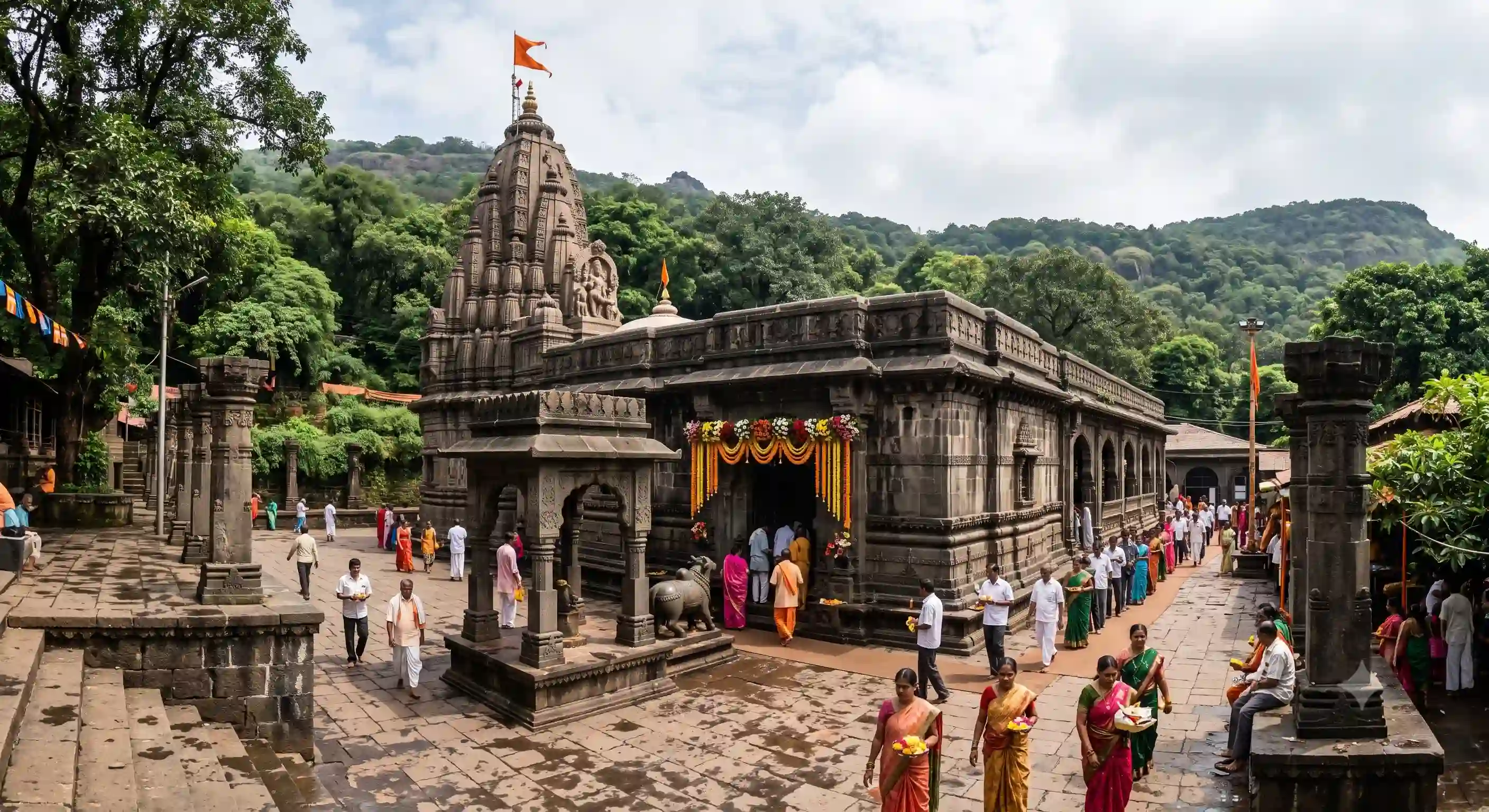
Nestled within the dense Sahyadri forests near Pune, Maharashtra, Sri Bhimashankar Jyotirlinga represents a timeless union of ancient Nagara-style architecture, rich biodiversity, and deep-rooted spir
Sources 1
- Major Temples, Tirthas & Dhams of India (Avyani project reference, EN + HI editions, Sep 2026)
Where a tradition is told differently from region to region or from one sampradaya to another, the tellings are given side by side.
Darshan timings, portal dates, registration rules and distances are approximate and change from time to time; please confirm with the official notices of the temple trust or administration before travelling.