


Kedarnath Jyotirlinga
Kedarnath Jyotirlinga (श्री केदारनाथ ज्योतिर्लिंग) — Jyotirlinga, Panch Kedar and Uttarakhand Chhota Char Dham
- Uttarakhand
- Strenuous
- PlaceKedarnath, Rudraprayag District, Uttarakhand (approx. 3,583 metres above sea level)
- Presiding deityShiva
Traveller Note: Registration is mandatory for the Char Dham Yatra as prescribed by the Government of Uttarakhand; owing to the altitude, be sure to undergo a health check, carry warm clothing and keep up-to-date weather information.
Before you set out
Registration is 100% mandatory for every single pilgrim visiting the Kedarnath Jyotirlinga Temple.
• Opening Rule (April/May): The exact date and auspicious time are calculated and officially announced by the temple priests on the festival of Mahashivratri at the Omkareshwar Temple in Ukhimath. This usually falls in late April or early May. • Closing Rule (October/November): The closing day is fixed according to the festival calendar and always occurs on Bhai Dooj. Due to heavy snowfall and extreme sub-zero temperatures, the temple remains closed for the six months of winter.
Scriptural and Historical Significance
- Puranic Reference: According to the Shiva Purana (Kotirudra Samhita), pleased by the austerities of the sages Nara and Narayana, Shiva abides here in the form of a Jyotirlinga. The Kedar Khand of the Skanda Purana describes the greatness of this region in detail.
- Legend of the Pandavas: According to Puranic legend, after the Mahabharata war the Pandavas came here in search of Shiva to be absolved of the sin of slaying their own kin; Shiva assumed the form of a mahisha (bull), and His hind portion (hump) is worshipped here. The remaining parts are worshipped at Tungnath, Rudranath, Madhyamaheshwar and Kalpeshwar — together these are called the Panch Kedar.
- Adi Shankaracharya: According to tradition, Adi Shankaracharya revived the system of worship at this dham (sacred abode); his samadhi site lies behind the temple, and after its reconstruction his statue was installed in November 2021.
- The 2013 Disaster: In the devastating floods of June 2013 the surrounding area was severely damaged, yet the temple remained safe; a huge boulder that came to rest behind the temple is worshipped as "Bhim Shila".
Key Features, Architecture, Rituals and Aarti
- Style: A temple in the North Indian (Himalayan / Katyuri) style built of massive grey stone blocks and set on a high plinth; the mandapa facing the garbhagriha contains images of the Pandavas, Shri Krishna and Nandi.
- Form of the Linga: The swayambhu linga in the garbhagriha is not the usual cylindrical form but an irregular triangular (pinda-shaped) rock, traditionally regarded as the hind portion of the bull.
- Worship Tradition: The chief priest, the "Rawal", comes from the Veerashaiva (Jangam) tradition of Karnataka; daily worship is conducted under his direction.
- Aarti: Mahabhishek and Rudrabhishek in the morning, and aarti in the evening following the Shringar Darshan; during the evening shringar the linga is adorned with garments and ornaments.
Best Time to Visit, Timings and Festivals
- Pilgrimage Season: The kapat (portals) generally open around Akshaya Tritiya (April–May) and close on Bhai Dooj (Kartik, October–November); the opening date is announced at Ukhimath on Mahashivratri.
- Winter Seat: In winter the five-faced utsav doli (festival palanquin) of Bhagwan Kedar resides at the Omkareshwar Temple, Ukhimath, where worship is conducted for six months.
- Best Time: May–June and September–October; landslides are a risk during the monsoon in July–August.
- Daily Darshan: Approx. 4:00 AM to 3:00 PM and 5:00 PM to 9:00 PM (Timings are subject to change; please confirm with the temple trust before travelling.)
How to Reach
- By Air: Jolly Grant Airport, Dehradun — approx. 240 km from Gaurikund; helicopter services to Kedarnath are available from Guptkashi, Phata and Sirsi.
- By Rail: Yog Nagari Rishikesh Station approx. 215 km (to Gaurikund); Haridwar Junction approx. 240 km.
- By Road: Via the Rishikesh–Rudraprayag–Guptkashi–Sonprayag route; local vehicles from Sonprayag to Gaurikund (approx. 5 km), followed by a trek of approx. 16–18 km from Gaurikund to Kedarnath (palanquins and ponies/mules available).
Nearby Spiritual and Other Places
- Bhairavnath Temple: The Kshetrapal (guardian deity) of Kedarnath — approx. 0.5–1 km.
- Adi Shankaracharya Samadhi: Directly behind the temple.
- Gandhi Sarovar (Chorabari Tal): Approx. 3 km.
- Vasuki Tal: Approx. 8 km (difficult trek).
- Triyuginarayan Temple: It is believed that Shiva and Parvati were wedded here — approx. 12 km from Sonprayag.
- Omkareshwar Temple, Ukhimath: The winter seat — approx. 40 km from Gaurikund.
Photos
-
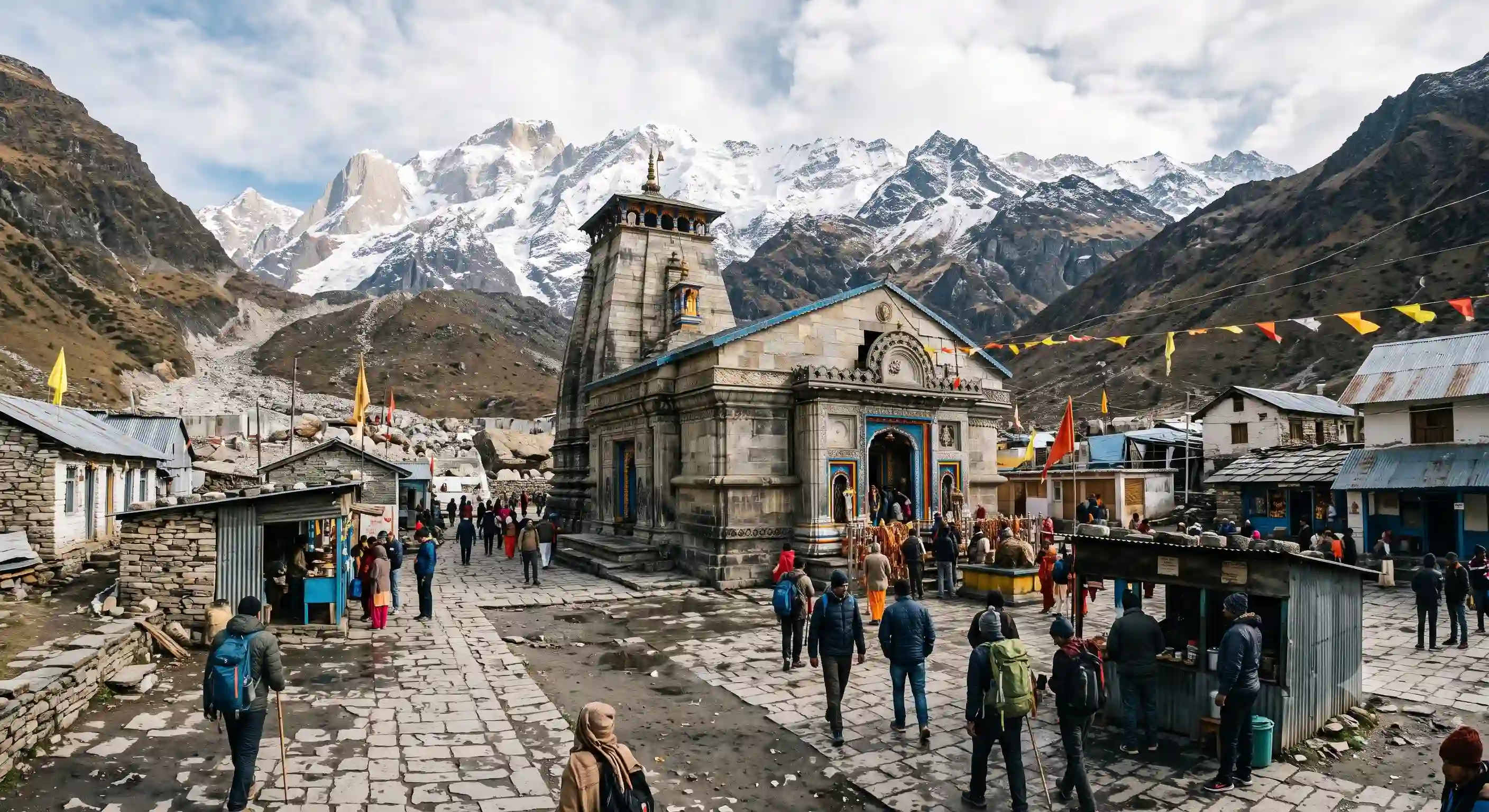
Nestled at an elevation of 3,583 meters in Uttarakhand, Sri Kedarnath Jyotirlinga is an epitome of timeless devotion, ancient Pandava lore, and enduring resilience. An essential pilgrimage uniting the
Sources 1
- Major Temples, Tirthas & Dhams of India (Avyani project reference, EN + HI editions, Sep 2026)
Where a tradition is told differently from region to region or from one sampradaya to another, the tellings are given side by side.
Darshan timings, portal dates, registration rules and distances are approximate and change from time to time; please confirm with the official notices of the temple trust or administration before travelling.