


Trimbakeshwar Jyotirlinga
Trimbakeshwar Jyotirlinga (श्री त्र्यंबकेश्वर ज्योतिर्लिंग) — Jyotirlinga
- Maharashtra
- Easy (Sugam)
- PlaceTrimbak, Trimbakeshwar Taluka, Nashik District, Maharashtra
- Presiding deityShiva
Traveller Note: Rituals such as Narayan Nagbali span several days; fix the priest and date in advance, and have the rituals performed only through the recognised priests' association.
Scriptural and Historical Significance
- Puranic Reference: According to the Shiva Purana (Kotirudra Samhita), pleased by the austerities of Maharshi Gautama, Shiva brought the Ganga down upon Brahmagiri, where she came to be known as the "Gautami Ganga", that is, the Godavari; at the sage's prayer, Shiva abides here in the form of Tryambaka. The stotra's phrase "त्र्यम्बकं गौतमीतटे" (Tryambakam Gautamitate) refers to this.
- Source of the Godavari: The nearby Brahmagiri mountain is the source of the Godavari River; the Kushavarta Kund near the temple is regarded as the symbolic source of the Godavari.
- Present Temple: The present temple was built by Peshwa Balaji Bajirao (Nanasaheb) in the mid-18th century (begun around 1755 CE).
- Simhastha Kumbh: The Simhastha Kumbh is held at Nashik–Trimbakeshwar every twelve years; the Shahi Snan (royal bath) of the Shaiva akharas takes place at Kushavarta in Trimbakeshwar. The next Simhastha is scheduled for 2027.
Key Features, Architecture, Rituals and Aarti
- Style: A Nagara-style temple of black stone with fine carving on the shikhara and mandapa; the complex is enclosed by a high stone wall.
- Three-faced Linga: Instead of the usual linga, the garbhagriha holds, within a hollow, three small lingas symbolising Brahma, Vishnu and Mahesh, over which water is ever present; this is the distinctive feature of this Jyotirlinga.
- Golden Crown: A jewel-studded golden crown (mukhauta, mask) is displayed for darshan one day a week (Monday evening) at a fixed time.
- Special Rituals: Vedic rituals such as Narayan Nagbali, Tripindi Shraddha and Kaal Sarp Shanti, for pacification of pitru-dosha (ancestral affliction) and lineage-related matters, are performed here by the traditional priests according to scriptural procedure.
Best Time to Visit, Timings and Festivals
- Best Season: October to March; in the monsoon (July–September) the greenery of Brahmagiri is striking, though crowds are larger.
- Daily Darshan: Approx. 5:30 AM to 9:00 PM; darshan in the garbhagriha pauses temporarily during the midday puja (Timings are subject to change; please confirm with the temple trust before travelling.)
- Major Festivals: Mahashivratri, Shravan Mondays (Brahmagiri Parikrama), Kartik Purnima (Tripurari Purnima Rathotsav) and the Simhastha Kumbh.
How to Reach
- By Air: Nashik (Ozar) Airport — approx. 55 km; Chhatrapati Shivaji Maharaj International Airport, Mumbai — approx. 180 km.
- By Rail: Nashik Road Station — approx. 40 km; Igatpuri Station — approx. 45 km.
- By Road: Regular buses from the CBS/Thakkar Bazaar bus stands in Nashik (approx. 30 km); accessible from Mumbai via Igatpuri.
Nearby Spiritual and Other Places
- Kushavarta Kund: For holy bathing and sankalpa (ritual resolve) — approx. 0.3 km.
- Brahmagiri Mountain and Gangadwar: Source of the Godavari — a climb of approx. 2–4 km by steps.
- Anjaneri Hill: According to tradition, the birthplace of Hanuman — approx. 7 km.
- Nivruttinath Samadhi: Elder brother and guru of Sant Dnyaneshwar — in Trimbak town, approx. 1 km.
- Panchavati, Nashik: Kalaram Temple, Sita Gufa and Ramkund — approx. 30 km.
Photos
-
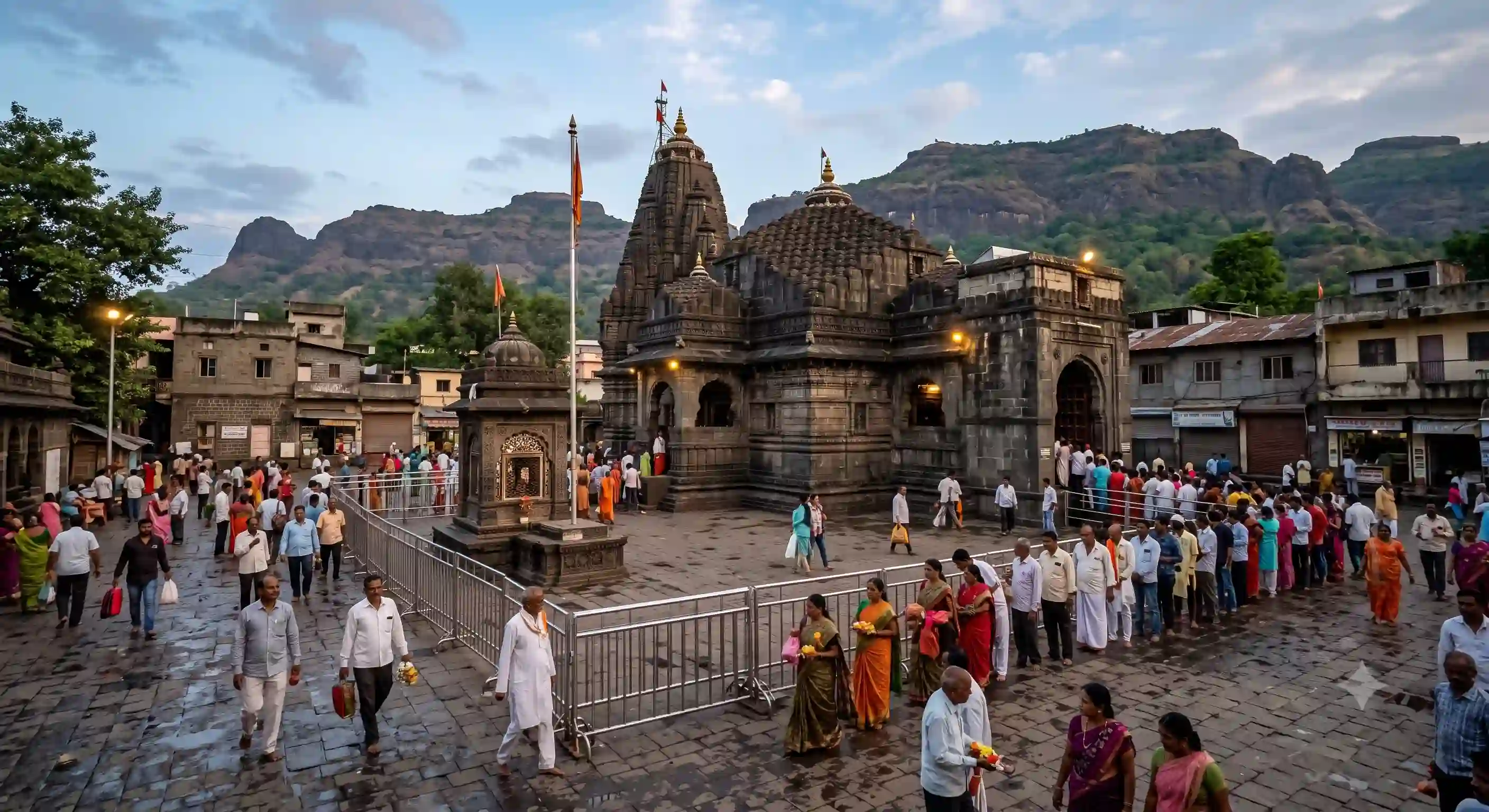
Discover the ancient aura of Sri Trimbakeshwar Jyotirlinga in Nashik, Maharashtra. Renowned for its exquisite black-stone Hemadpanthi architecture, the holy Kushavarta Kund, and its deep Vedic signifi
Sources 1
- Major Temples, Tirthas & Dhams of India (Avyani project reference, EN + HI editions, Sep 2026)
Where a tradition is told differently from region to region or from one sampradaya to another, the tellings are given side by side.
Darshan timings, portal dates, registration rules and distances are approximate and change from time to time; please confirm with the official notices of the temple trust or administration before travelling.