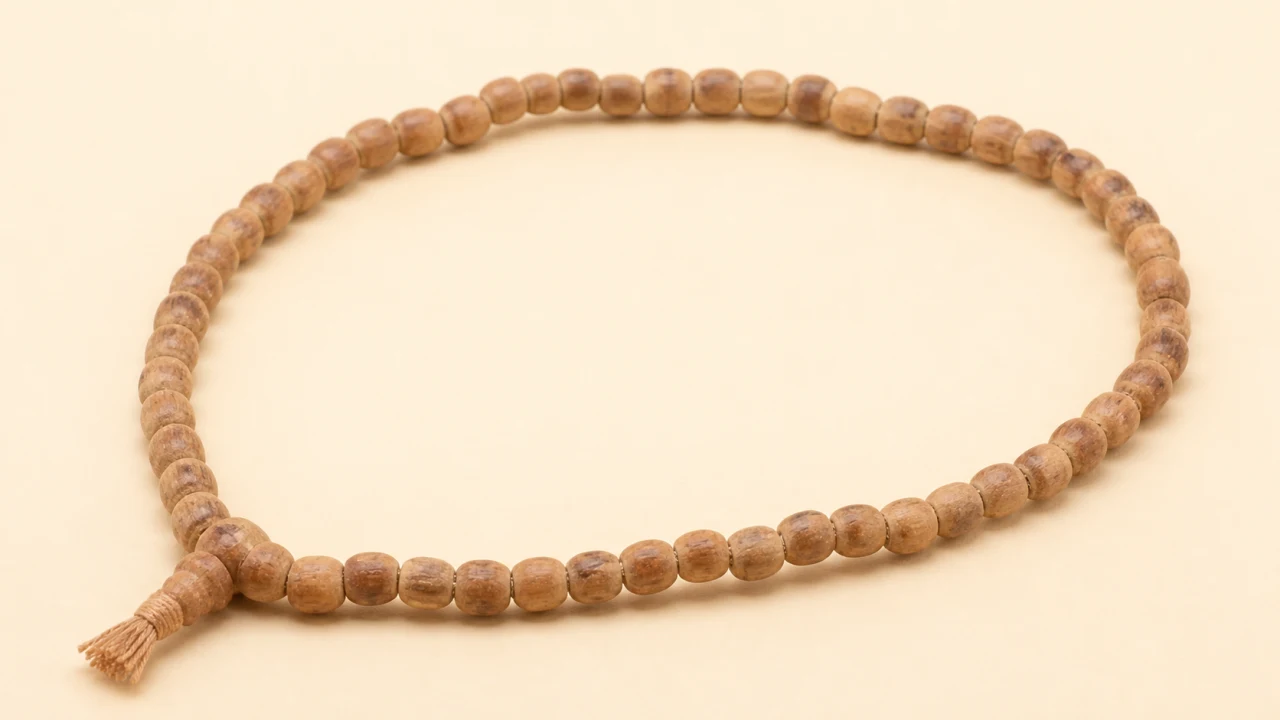
Tulsi Japa Mala is a strung devotional article represented as Tulsi wood; species identity cannot be established from bead colour alone. It is included because it has a stable practical identity and documented religious use; commercial adjectives and promised effects are not part of that identity.
Symbolic AI-generated review illustration; not proof of material identity, treatment, provenance, consecration or authenticity.
Canonical identity
Tulsi Japa Mala · Tulsi wood bead assembly
Identification and authenticity
Identity and selection: Check bead count, thread strength, knots, smooth drill holes and disclosed wood source. Light weight or fragrance is not conclusive. Botanical authentication is easiest before wood is heavily processed; DNA or chemical methods also have sampling and reference limitations. Choose sound construction, transparent sourcing, an accurate material description and a form suitable for the intended devotional use. Compare the invoice with the actual object and retain photographs and provenance.
Wearing or use
In practice it may be used respectfully for japa, worship, offering or keeping in a clean devotional space, according to the relevant tradition. Start with clean hands and a sound, safely made object. Where a mantra, installation or lineage-restricted rite is involved, follow competent guidance rather than a seller's generic instruction. Scientific or material testing can address composition and construction; it cannot prove divine agency, guaranteed protection, planetary correction, medical benefit or personal suitability.
Preparation and purification
There is no single purification method established as compulsory for every tradition. A clean cloth, clean dry handling and a simple prayer are the safest general preparation. Do not soak wood, threaded malas, plated metal, filled capsules or unidentified materials. Record bead count, condition and any maker documentation before use.
Maintenance and precautions
Do: keep clean, dry and separately wrapped; inspect thread, knots, edges, corrosion, cracks and loose parts; handle respectfully and retain source records. Do not: use perfume, oil, detergent or abrasive polish without material-specific advice; share items that contact skin when hygiene is uncertain; ingest any material; treat a symbolic image or ritual claim as proof of authenticity. Replace unsafe thread or fittings without pretending that repair preserves an undocumented provenance.
Evidence and sources
Modern research
Canonical identity: Tulsi wood bead assembly. A name, colour, scent or photograph cannot authenticate a specimen; independent material testing or provenance is required.
Do not treat commercial certificates, seller claims, symbolic images, price or claimed benefits as proof of identity, efficacy or personal suitability.