The Siva Purana 1.25.77 associates 11 faces with Rudra.
Source: The Siva Purana, Part I — Vidyesvara-samhita, Chapter 25 · Vidyesvara-samhita, Chapter 25 · Verse 77

Select your language


11 Mukhi Rudraksha has 11 principal natural faces. The Siva Purana gives Rudra; the Rudraksajabala witness gives the eleven Rudras; Devi Bhagavata 11.4 gives the eleven Rudras and topknot wearing and 11.7 gives the eleven Rudras, with an additional Indra reading. These readings are retained separately.
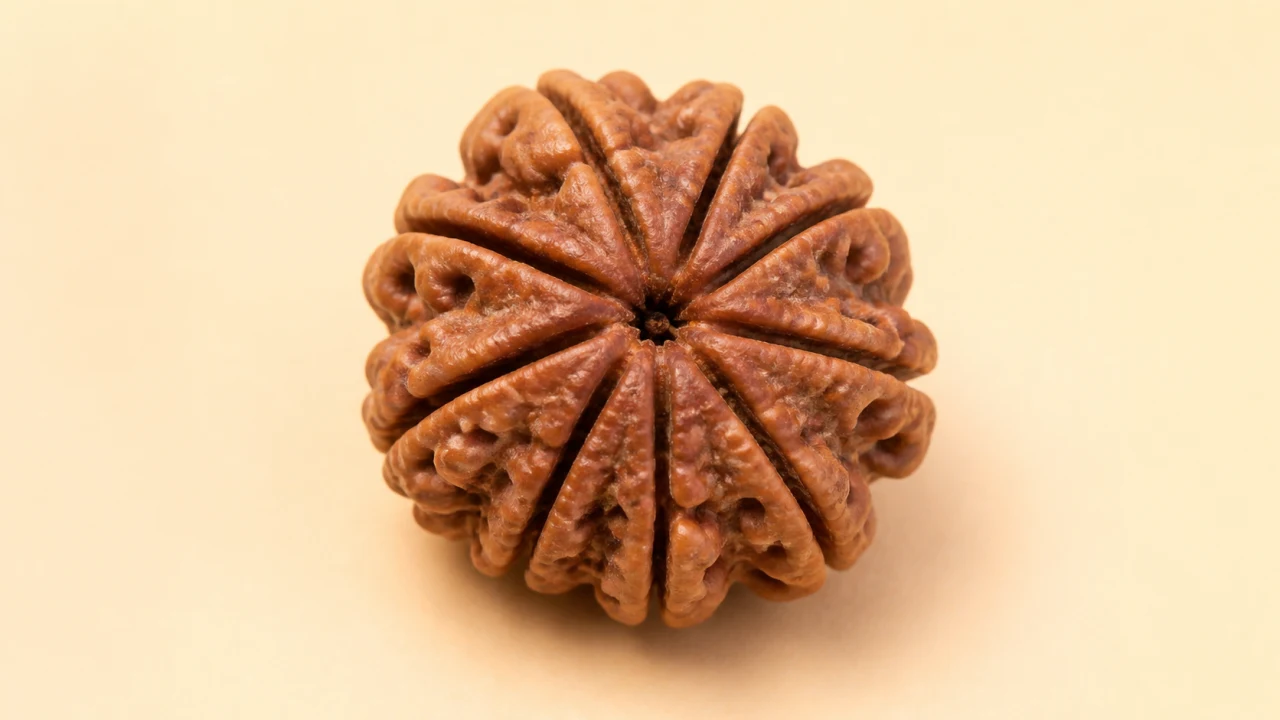
Rudraksha bead (Elaeocarpus angustifolius endocarp) · botanical fruit endocarp
Trace 11 principal natural clefts continuously between both poles. Inspect both poles and a full rotation. A photograph cannot prove internal locules, species, origin, rarity or an unaltered bead. Reject carved or deepened grooves, filler, glued halves, moulding and undisclosed repairs.
The Siva Purana mantra table gives “Om Hrim Hum Namah”. This is an edition-specific reading. Source-specific wearing instructions are reported without turning them into one universal rule; seek competent guidance for bija pronunciation.
Inspect with clean hands. If the setting permits, wipe briefly with clean water and dry fully in shade. The consulted sources do not establish one purification method as compulsory for every tradition.
Keep dry; use a soft dry brush; avoid detergent, perfume, varnish, prolonged soaking and heavy oiling. Victory, fertility, neurological, planetary and guaranteed-leadership claims remain unsupported. Religious fruit-statements are not medical evidence or guaranteed outcomes.
The Siva Purana 1.25.77 associates 11 faces with Rudra.
Source: The Siva Purana, Part I — Vidyesvara-samhita, Chapter 25 · Vidyesvara-samhita, Chapter 25 · Verse 77
The Siva Purana mantra table gives Om Hrim Hum Namah for 11 faces.
Source: The Siva Purana, Part I — Vidyesvara-samhita, Chapter 25 · Vidyesvara-samhita, Chapter 25 · Mantra table after verse 81
Morphology and X-ray can document some structures but do not by themselves prove species, origin, rarity or sacred efficacy.
Source: Morphometric Characteristics of Endocarp, Seed and Embryo of Elaeocarpus ganitrus · Results and Figures 1–4 · pp. 172–177