


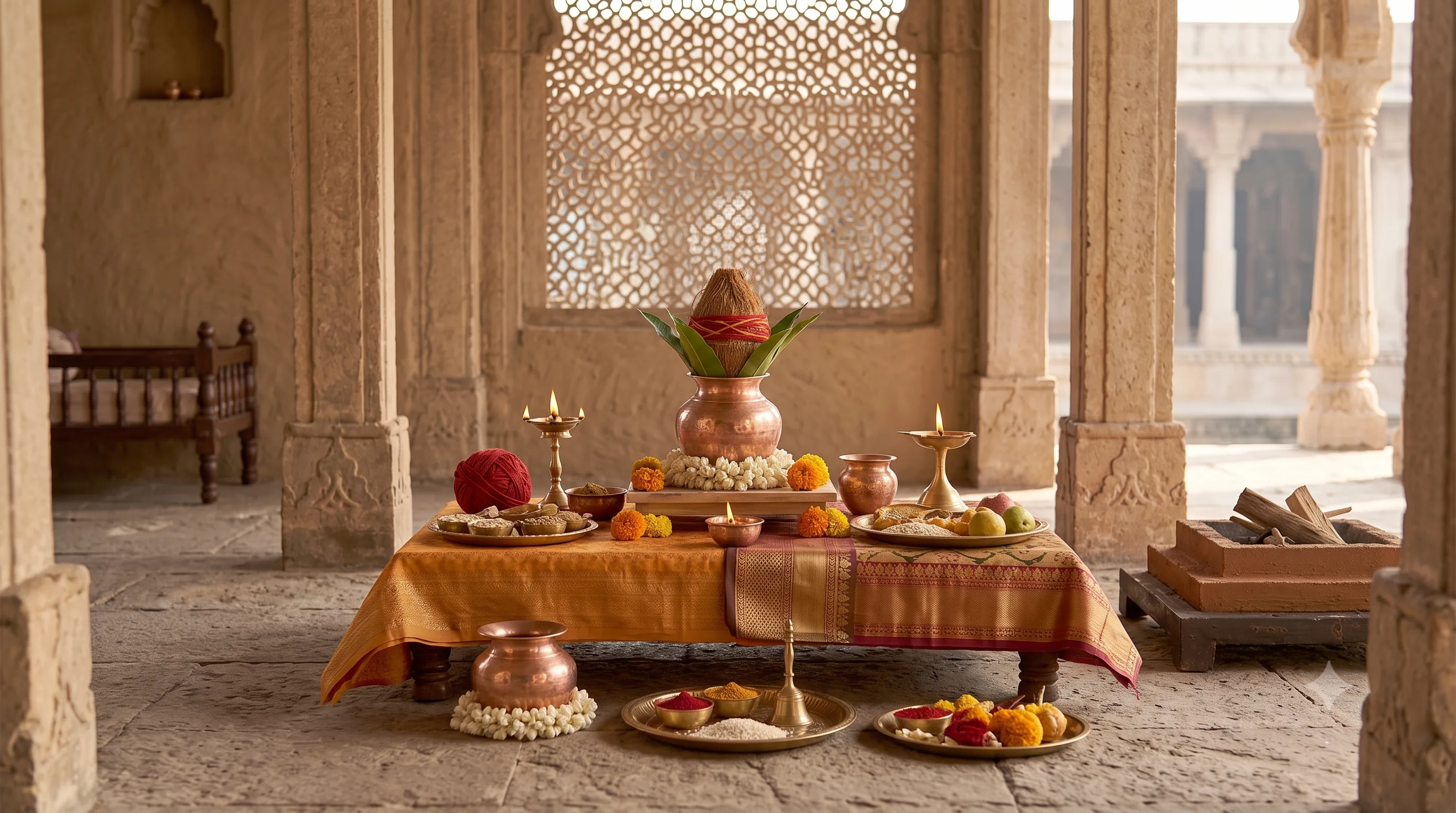
The Shodasha Samskaras — sixteen sacraments marking a life from conception to the final rites. This guide sets out where the sixteen come from, why the number itself varies between texts, and which of them households still keep.
A samskara is a refining or a making-ready. The sixteen mark the transitions of a life — conception, birth, naming, learning, marriage, death — and give each of them a ritual form, an intention and a gathering.
Where this guide says scripture, it names a text you can check; where it says tradition or regional practice, the custom is real and widely followed but has no single locator, and families differ enormously in what they still keep.
Why Sixteen
The number is not fixed in the sources, which is worth knowing before anyone worries about having missed one.
Scripture. The Grihya Sutras describe the domestic rites without agreeing on a total, and they differ on details as basic as which month of pregnancy a rite falls in. Gautama's Dharmasutra enumerates forty samskaras, counting the great offerings and the seven-fold yajna groups alongside the life-cycle rites.
The familiar sixteen — shodasha samskara — is a later standardisation, settled in the Smriti and paddhati literature as the life-cycle rites drew apart from the sacrificial ones. It is the working list the tradition now uses, and it is a summary rather than a scriptural decree.
Before Birth
Garbhadhana sanctifies conception. Pumsavana is observed in early pregnancy and Simantonnayana in later pregnancy, for the wellbeing of mother and child; the latter survives in most households as godh bharai, described in our Marriage Rituals guide, and is the one of the three that is still widely kept.
Infancy and Childhood
Jatakarma is performed at or just after birth. Namakarana, the naming, usually follows within the first weeks, and Nishkramana marks the infant's first outing. Annaprashana celebrates the first solid food, and Chudakarana — mundan — is the first ritual haircut, often kept at a family temple.
Regional practice. Karnavedha, the ear-piercing, is observed for both boys and girls in southern and western traditions and much less consistently elsewhere. Several of these rites also travel: mundan in particular is performed at Tirupati, at Balaji shrines and at many kuladevata temples rather than at home.
Learning
Vidyarambha marks the beginning of formal learning, often with a first letter traced in rice or sand. Upanayana, the sacred thread ceremony, is the most consequential of the sixteen — a second birth and the start of Vedic study — and the thread itself, the danda and the asan are covered in our Cloth and Sacred Threads and Miscellaneous guides.
Vedarambha begins the study proper, Keshanta marks the first shaving in youth, and Samavartana the completion of studentship and return home — historically the graduation that preceded marriage.
Marriage, Withdrawal and the Last Rite
Vivaha, the fourteenth, is the entry into the householder stage and is covered in full in our Marriage Rituals guide.
Vanaprastha marks the turn towards withdrawal from household duties. In practice it is now almost always symbolic rather than a literal retreat, and many families mark it not at all.
Antyeshti, the last offering, is the funeral rite. What follows it — asthi visarjan, sapindikarana, and the ancestral observances that continue for the rest of a family's life — is described in our Shraddha and Pitru Karma guide.
What Households Actually Keep
Practical guidance. Very few families observe all sixteen, and none should feel they have failed for that. The rites still widely kept are namakarana, annaprashana, mundan, vidyarambha or aksharabhyasa, upanayana in the communities that hold it, vivaha, and antyeshti with the shraddha that follows.
Which apply, in what form, and on what day is family and sampradaya knowledge. A priest of your own tradition — ideally the one who knows your family — is the person to ask, and the answer will reasonably differ from a neighbour's.
The Sixteen Samskaras at a Glance
Durations are typical planning ranges. "Traditionally for" records the intention the tradition assigns — not an outcome Avyani predicts or guarantees.
| Samskara | Tradi |
Typical duration | Priest advised |
|---|---|---|---|
| Garbha | Sanctifying conception | 30–45 mins | Yes |
| Pumsavana | Early pregnancy blessing | 30–45 mins | Yes |
| Simanton | Mother and child; godh bharai | 1–1.5 hours | Yes |
| Jatakarma | Welcoming the newborn | 30–45 mins | Yes |
| Nama | Naming the child | 1–1.5 hours | Yes |
| Nishkra | First outing of the infant | 30 mins | No |
| Annapra | First solid food | 1 hour | No |
| Chuda | First tonsure; mundan | 1.5–2 hours | Yes |
| Karna | Ear-piercing; regional | 30–45 mins | No |
| Vidya | Beginning of learning | 1 hour | Yes |
| Upana | The sacred thread; Vedic study | 3–4 hours | Yes |
| Veda | Vedic study begins | 1–2 hours | Yes |
| Keshanta | First shaving; youth | 1 hour | Yes |
| Sama | End of studentship | 1–2 hours | Yes |
| Vivaha | Entry to household life | 3–4 hours | Yes |
| Vana | Turning to withdrawal | Symbolic; varies | Yes |
| Antyeshti | The final rite | 2–4 hours | Yes |
Our How to Perform a Simple Home Puja guide covers the household worship that accompanies most of these, and the Samagri Catalogue the materials they use.
Sources
- The number of samskaras varies between sources: Gautama's Dharmasutra enumerates forty, counting the yajna groups alongside the life-cycle rites; the sixteen are a later standardisation in the Smriti and paddhati literature.
- The Grihya Sutras differ on the details of individual rites, including the month of pregnancy for Pumsavana and Simantonnayana.
- Karnavedha and mundan practice, and mundan at pilgrimage shrines — documented regional variation.
- Ritual names, durations and priest-advised flags — Avyani Master Puja & Ritual Catalogue. Durations are planning ranges, not prescriptions.
Where a scriptural locator could not be verified, the statement is given as tradition or regional practice rather than scripture. Stated purposes are the intentions the tradition assigns, not outcomes Avyani predicts.